About Speech Plus

A clinic built around communication, listening and learning readiness

Parents meet a team that looks at speech, hearing, learning and classroom readiness together - useful when a child’s concern does not fit one simple box.

Special Educationlearning, comprehension, school tasks
Speech + Audiologycommunication, listening, hearing guidance
Parent claritydemo observations explained clearly
Free 2 demo sessionsA calm first visit to understand the right starting point.
Clinic story

Why the two-discipline model matters

A child rarely arrives with one neat problem. A child who is not speaking clearly may also miss instructions. A child who avoids reading may also have weak comprehension, writing fatigue or attention difficulty.

That is why Speech Plus is designed as a coordinated space. Special education helps the child build learning, comprehension, reading, writing and independence skills. Speech-language and audiology support helps the child express, listen, respond and communicate. When both views are present, parents receive a more usable plan for home and school.

“A child should not have to keep changing rooms, clinics and explanations before the adults understand what support is actually needed.”
Our team

Two profiles, equal responsibility

Each profile explains what the specialist actually handles, so parents can understand whether the first need is learning support, speech-language therapy, hearing guidance or a combined plan.

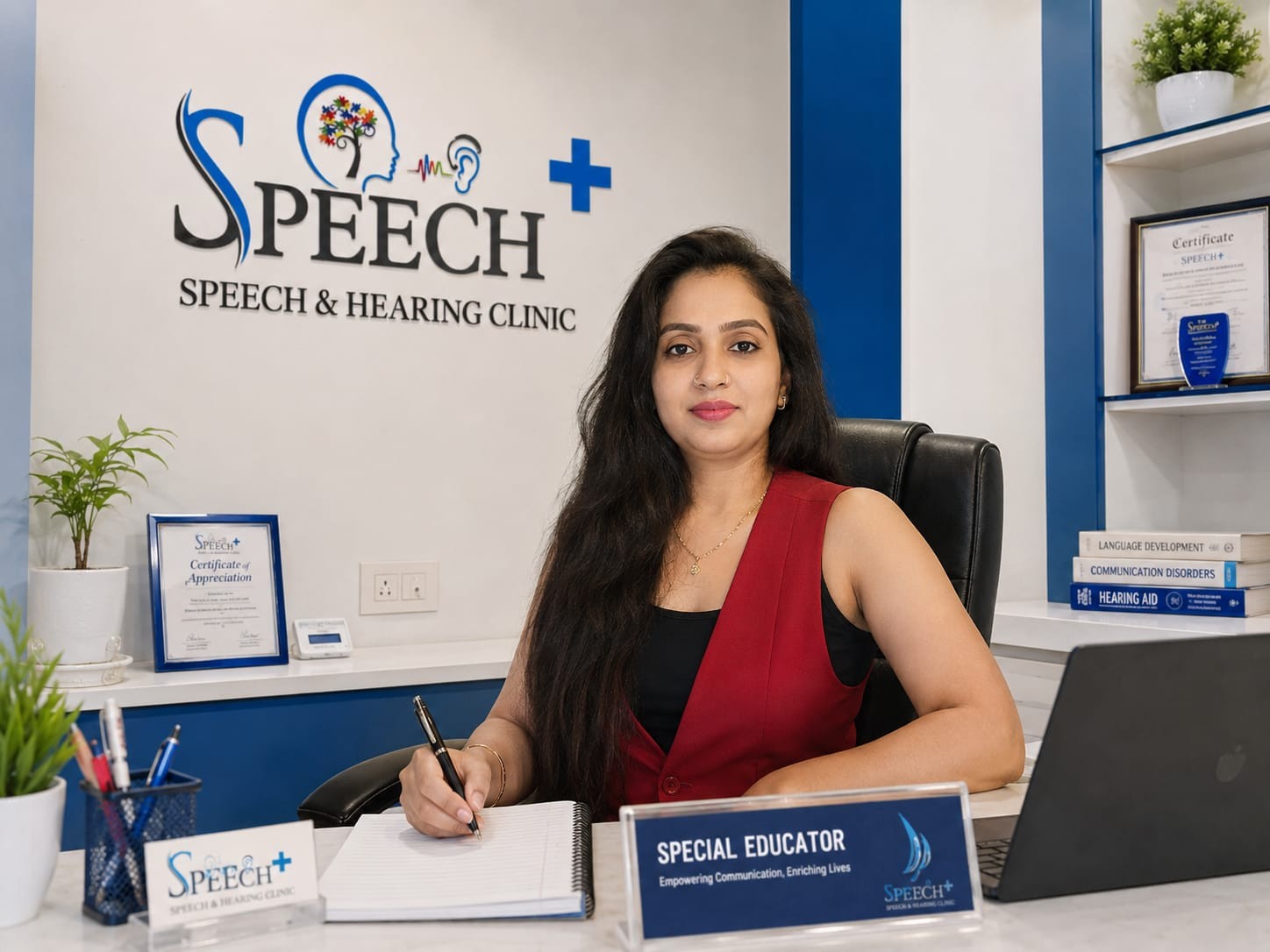
Deepshikha Junwal, Special Educator
Special Educator

Deepshikha Junwal

Special Educator — Intellectual Disability & Hearing Impairment

Deepshikha supports children who need structured help with learning, comprehension, school readiness, attention, handwriting, reading and independence skills. Her sessions are practical: the child works through small, visible tasks that can later be repeated at home or school.

For families facing intellectual disability, hearing impairment or slow academic progress, her role is to translate broad concerns into daily goals: follow an instruction, understand a concept, complete a writing step, participate in a routine, or communicate a need more clearly.
Special educationLearning readinessSchool support
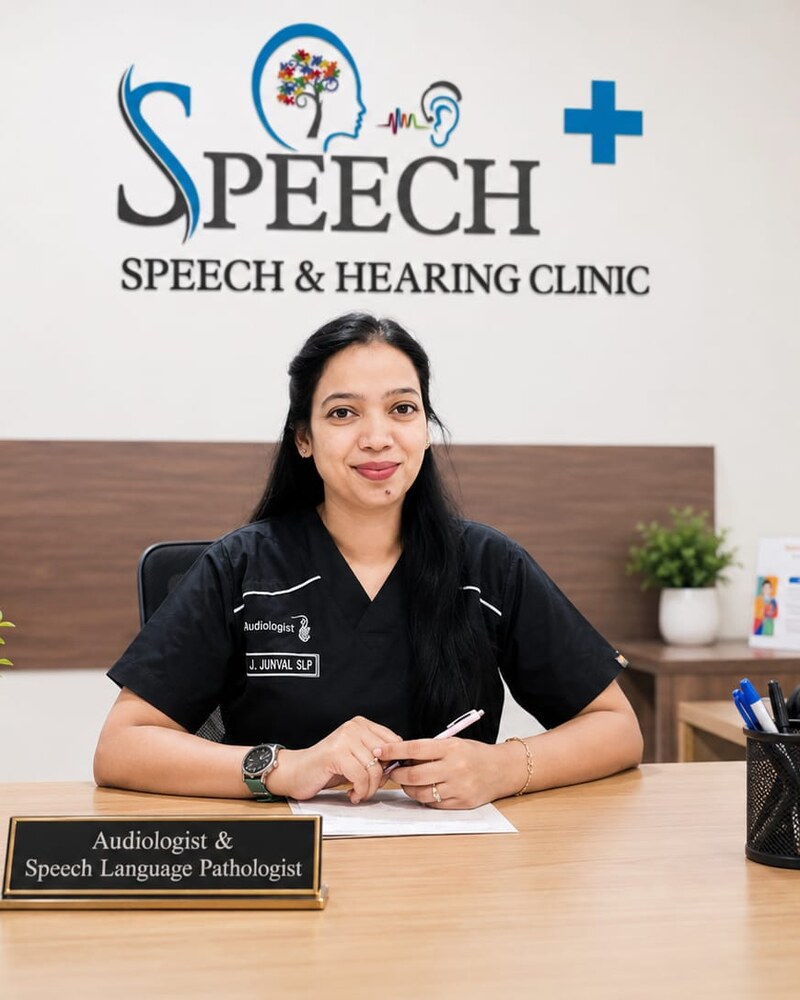
Jagrati Junwal, Speech-Language Pathologist and Audiologist
Speech-Language Pathologist & Audiologist

Jagrati Junwal

BASLP, MA Psych — Speech-Language Pathologist & Audiologist, CRR No. A51587

Jagrati works with children who need support in speech-language development, communication clarity, listening response and hearing-related concerns. Her background in audiology and psychology helps parents understand not only what the child says, but how the child is hearing, processing and responding.

Her sessions may include speech-language stimulation, listening-based activities, parent guidance, communication routines and audiology-linked planning when hearing impairment or inconsistent response is part of the concern.

Speech-language therapyAudiology supportCRR No. A51587
Approach

The child is observed in activity, not judged from a form

Parents may bring school feedback, medical history or a simple worry that “something is not matching.” The clinic uses observation, play, structured tasks and parent discussion to decide the next step.

Concrete goals

Goals are written around observable skills: answer a question, copy a line, respond to name, hold attention, finish a pre-writing task or join a group activity.

Parent clarity

Parents are told what the task is checking and why it matters for speech, hearing, classroom learning or daily independence.

Real rooms

The child is observed in child-sized rooms with tables, movement space, activity materials and routines similar to what therapy will actually use.